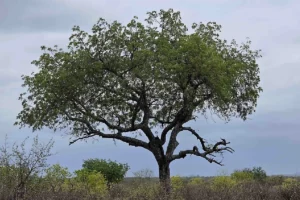
Manager’s Newsletter – October 2025 (Summary)
Rainfall:
- October: 56 mm
- Season to date: 62 mm
- Highest single-day rainfall since 2008 recorded on 24 October (50 mm)
Vegetation & Flora
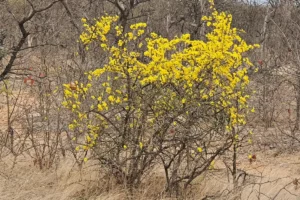
Mopani Pomegranate (Rhigozum zambesiacum)
- First plant to flower after the rains
- Bright yellow, trumpet-shaped flowers
- Indigenous shrub/small tree (up to 4 m)
- Not related to the common pomegranate
- Fruit not typically eaten by humans; considered a good-luck plant in some cultures
Wildlife Condition
Water & Feeding:
- Most dams were dry by mid-October
- Only dams at stands 62, 63, and 21 still held water
- Borehole-fed points were crucial
- Supplementary feeding provided as buffalo, wildebeest, and zebra showed early signs of strain
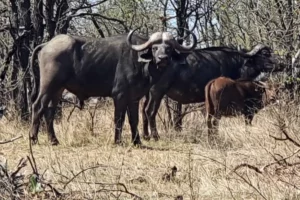
Buffalo:
- Some showing malnutrition due to drought conditions
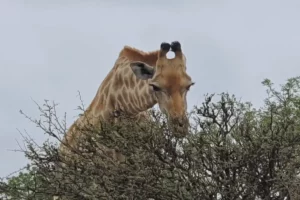
Giraffe:
- Increased browsing on high-tannin plants (e.g. sickle bush)
- Excess tannin causes poor digestion, nutrient loss, weight loss, and—in severe cases—organ damage or death
Snakes
Hot weather increased snake activity. Residents should be able to identify the five most venomous snakes in the Phalaborwa area:
- Black Mamba
- Mozambique Spitting Cobra
- Puff Adder
- Boomslang
- Snouted Cobra
Focus for this month:
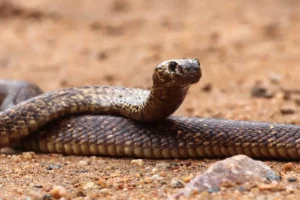
Snouted Cobra:
- Potent neurotoxic venom
- Causes respiratory failure
- Frequently responsible for pet fatalities
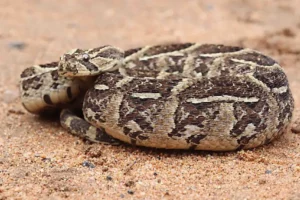
Puff Adder:
- Slow-moving, often stepped on
- Strongly cytotoxic venom causing swelling and tissue damage
- Responsible for many bites in Africa
Elephant Activity
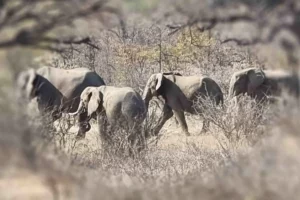
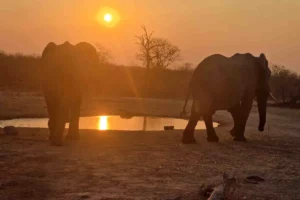
Due to a poorly maintained Letaba Ranch fence, elephants entered the reserve more frequently before the rains.
- Damage reported at stands 23 and 25
- Significant impact on vegetation (e.g., raisin bushes, marula trees)
- Still offered excellent sightings for residents and visitors
Tree of the Month: Marula (Sclerocarya birrea)
- Medium-large indigenous tree; iconic in African culture
- Produces vitamin C–rich fruit used for food, drinks, and Amarula liqueur
- Important wildlife food source (especially for elephants)
- Seeds and oil valued for culinary and cosmetic uses
- Drought-resistant and grows well in sandy loam soils
- Male and female trees grow separately; only females bear fruit